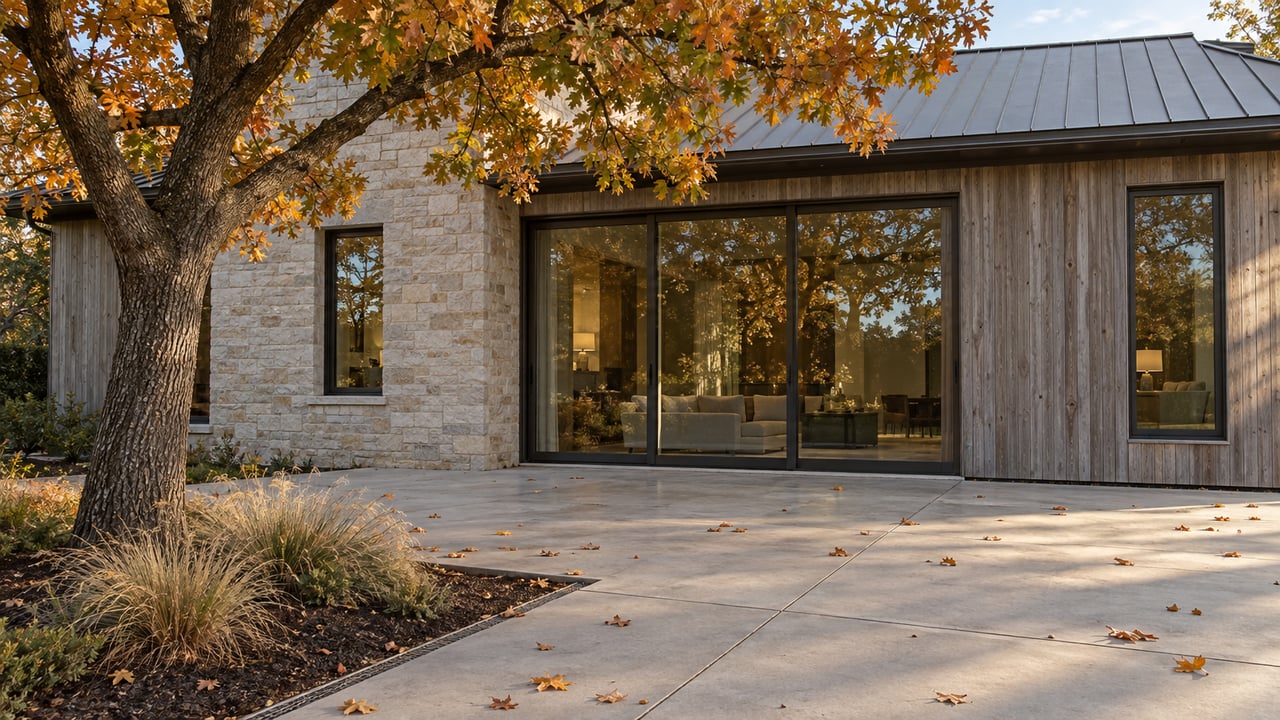
From Panorama Point, the overlook near the summit road on Flagstaff Mountain, the whole argument is visible at once. Look west toward Nederland and the high country along the Peak to Peak Scenic Byway and the color has already thinned out, gone from gold to bare in patches. Look down at the town spread below, at the cottonwoods along Boulder Creek and the maples on Mapleton Hill, and you're still mostly looking at green. Same week. Same overlook. Two different seasons.
That gap is the whole story. Boulder doesn't get one fall color peak. It gets a line that starts high and moves downhill for roughly six weeks, and right now, in the last week of September, that line sits somewhere between the foothills and the valley floor. If you drove up to Nederland last weekend expecting a repeat of what you saw two weeks ago, you were probably too late. If you're waiting for the maples on your own street to turn before you plan anything, you've still got time.
The Line, Not the Date
Colorado's fall color is elevation driven before it's anything else. Aspens at 9,000 to 11,000 feet respond to shortening daylight and start changing first, typically in the subalpine zone in early September, then the color band works its way down through the montane forest as the month goes on. That's a national pattern, but Boulder sits in an unusually compressed version of it. The mountains just west of town, the ones you can see from nearly anywhere downtown, run through their own color cycle while the valley below is still deep in late summer. Then, weeks later, the same transformation happens again at street level with a completely different cast of trees.
The trees themselves aren't the same either. Up high, it's aspen groves turning that signature gold. Down in town, it's the cottonwoods along the creek paths, the oaks and maples on residential blocks, and Mapleton Hill's mature street canopy that carries the color, running more toward yellow with pockets of orange rather than the aspen gold everyone photographs on the byway. A regional forecast that groups Boulder in with the broader Front Range foothills put that lower-elevation window at October 10 through 22, a full month after the high country's peak.
What the High Country Already Used Up
The 2026 season up high ran on roughly the schedule you'd expect, just early. One regional foliage report tracking conditions through the Peak to Peak corridor placed the mountains west of Boulder in a September 13 to 24 peak window. That window has already closed. If you're still picturing Nederland at its best, you're picturing two weeks ago.
Boulder Oktoberfest, which usually runs in early September at the St. Julien Hotel, lines up with almost exactly the moment the first hints of yellow were only starting to show at the highest elevations. Town level was still deep green when that beer garden closed, and it would stay that way for another month.
Why the Schedule Moved Early This Year
This year's timing wasn't random. A dry summer and drought stress pulled the change forward in parts of the state, according to Colorado State Forest Service assessments cited alongside this year's forecasts, with some higher and drier aspects showing color earlier than usual and running through it faster once it started. Stressed trees don't linger in transition. They turn and drop.
That's useful information beyond just knowing you missed a weekend. It tells you where to put your attention for the rest of the season. The trees that ran early and fast this year were the ones on exposed, high-elevation, moisture-starved ground, the aspen stands the whole state watches every September. The trees still ahead of you are a different population entirely: the cottonwoods and willows that line Boulder Creek, the willows and cottonwoods ringing the eighteen ponds at Sawhill east of town, the maples shading Mapleton Hill's brick sidewalks. Those trees sit closer to water and lower in elevation, conditions that tend to buffer against the kind of stress that pushed the high country early. If the mountains disappointed you this year, the case for waiting on the in-town show just got a little stronger, not weaker.
Where the Color Actually Is Right Now
Right now, late September, you're in the gap between the two acts. The practical version of this looks like a short list, split by what's already past and what's still building.
Past peak, thinning fast: The Peak to Peak Byway west of Nederland is on the downside of its color now. Worth a drive if you want to see what's left, not worth planning a whole day around anymore.
Turning now, worth a look this week: The drive into Eldorado Canyon State Park shows an early preview of what's coming to lower elevations, with hillside sumac running toward a deep burgundy well before the valley's cottonwoods catch up. The short Streamside Trail there follows South Boulder Creek through mature trees and makes a reasonable stop if you're already headed that way, though park entrance fees apply.
Still two to three weeks out: Mapleton Hill, one of Boulder's most historic neighborhoods, typically becomes one of the more striking in-town displays as its street trees turn. The McClintock Trail below Chautauqua, framed by the Flatirons, follows cottonwoods, willows, and brush that haven't started their change yet. Sawhill Ponds, with its eighteen small bodies of water east of town, holds a similar lag. Varsity Bridge on the CU campus, arching over Varsity Lake near Old Main and Macky Auditorium, is worth circling back to once the campus canopy catches up, with plenty of casual food nearby in the NoBo district if you make an afternoon of it.
None of those in-town spots are ready yet. Based on the regional forecast window and how the last several seasons have played out here, the first half of October is the more realistic target.
What to Check Before You Go
One thing has changed on the ground that's worth knowing before you head into the foothills for any of this. Stage 1 fire restrictions have been in effect for western Boulder County since September 9, a direct extension of the same dry conditions that pushed the color schedule early this year. That means no open fires or certain fuel-based equipment in the restricted zone, which covers a lot of the same ground as the drives and trailheads above.
Separately, the city's open space department has bear-related leash requirements active right now in specific foraging areas as animals feed heavily ahead of hibernation. Vesper Trail, for one, remains open but requires dogs on leash. None of this closes the good color-viewing spots. It just means checking the city's current OSMP closures list before you go is worth the two minutes, especially if you're bringing a dog or planning to cook anything on a portable stove along the way.
The six-week version of this season means there isn't a single Saturday to circle on the calendar. There's a slow-moving line, already well down the mountainside, still climbing toward Boulder's own streets. Early October is when it reaches Mapleton Hill and the creek paths. Right now is just the quiet middle of the trip.
If you're the kind of person who tracks which block turns first every year, or you've ever wondered what a house near Mapleton Hill's canopy or the Boulder Creek Path actually looks like once the color arrives, Boulder Residential spends as much time on these trails as we do anywhere else in this business. Reach out anytime you want a local read on a specific street or season.