If you have ever walked through Boulder and felt like the houses were telling different chapters of the city’s story, you are not imagining it. From Victorian-era streetscapes to cottage clusters near the foothills, Boulder’s historic districts offer more than older homes. They give you a sense of how the city grew, what each area values, and what ownership can look like today. If you are exploring a move, comparing neighborhoods, or thinking about buying a character home, this guide will help you understand the architecture, the feel of each district, and the practical details that matter. Let’s dive in.
Boulder’s historic districts at a glance
Boulder has 10 local historic districts and more than 1,300 designated historic properties, including more than 200 individual landmarks. These districts were designated because of their historic, architectural, or environmental significance.
The city’s 10 local historic districts are Floral Park, Chautauqua, Mapleton Hill, West Pearl, Chamberlain, Downtown, Hillside, Highland Lawn, University Place, and 16th Street. In Boulder, historic preservation is not just about one house at a time. It also includes streetscapes, tree canopy, open space, and the visual rhythm between buildings.
That broader view helps explain why these areas often feel so distinct. When you walk through them, you are experiencing a preserved pattern of development, not just a collection of old structures.
What architectural styles you’ll see
Several home styles appear again and again across Boulder’s historic districts. Knowing the basics can help you quickly read a block and understand why one area feels formal, another feels cottage-like, and another feels more modest and practical.
Italianate homes
Italianate buildings often have a vertical shape, low overhanging roofs, and decorative brackets under the eaves. In Boulder, this style appears most often in older districts tied to the city’s late-19th-century growth.
Queen Anne homes
Queen Anne homes are usually asymmetrical and visually lively. You may notice mixed materials, porches, shingles, and sometimes turrets or varied rooflines.
Craftsman and bungalow homes
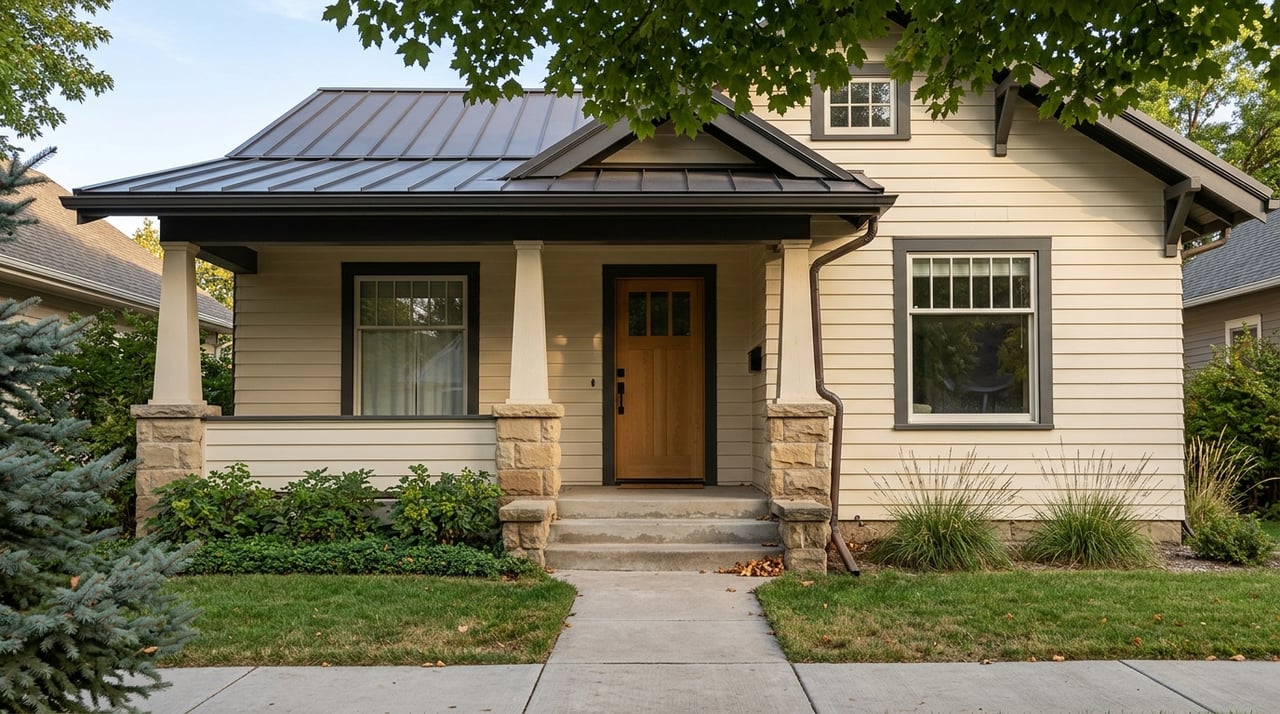
Craftsman and bungalow homes tend to sit lower and wider on the lot. Broad roofs, wide eaves, and exposed rafters give them a grounded, practical look that remains popular with buyers today.
Tudor Revival homes
Tudor Revival homes are easy to spot once you know the signs. Look for steep gables, tall narrow windows, false half-timbering, and prominent chimneys.
Colonial Revival homes
Colonial Revival homes usually feel more symmetrical and formal. Common details include classical porches, columns, pedimented openings, and fanlights.
Mapleton Hill and Boulder’s Victorian roots
Mapleton Hill is Boulder’s third and largest historic district. Its history is tied closely to the city’s 1880s growth, and the area is known for its established streets, mature trees, and layered mix of building periods.
Architecturally, Mapleton Hill includes Italianate, Queen Anne, and bungalow-era buildings. The district’s design guidance emphasizes that massing and roof form are key character-defining features, which helps explain why the neighborhood feels visually cohesive even with a range of home styles.
For many buyers, Mapleton Hill represents the classic image of historic Boulder. It tends to feel leafy, established, and deeply connected to the city’s early residential development.
Chamberlain, Highland Lawn, and West Pearl
Not every historic district in Boulder was shaped by the same economic or social forces. Chamberlain, Highland Lawn, and West Pearl each tell a slightly different story, and their homes reflect that.
Chamberlain’s modest late-19th-century fabric
Chamberlain sits next to downtown and was primarily developed from 1859 to 1910. Its architecture is mostly late-19th-century vernacular, with representative Queen Anne, Edwardian, Classic Cottage, and Terrace forms.
Compared with Mapleton Hill, Chamberlain has a more modest origin story. That gives the district a practical, close-in character that still feels connected to Boulder’s earliest residential growth.
Highland Lawn’s turn-of-the-century mix
Highland Lawn was platted in 1884 and later annexed in 1891. The district includes well-preserved examples of Queen Anne, Classic Cottage, and Edwardian Vernacular styles, along with a contributing bungalow from 1925.
If you are drawn to turn-of-the-century architecture, Highland Lawn offers a compact look at changing residential tastes over time. The district reads as well preserved without feeling frozen in one exact style.
West Pearl’s vernacular history
West Pearl grew in what was once the industrial West Boulder area near the railroad. The district includes 25 buildings and reflects housing used by Boulder families of modest means between 1874 and 1906.
That history gives West Pearl a more utilitarian feel than some of Boulder’s more ornamental districts. Its value is not about grandeur. It is about authenticity, location, and a strong connection to the city’s working history.
Chautauqua, Hillside, and campus-adjacent districts
Some of Boulder’s historic districts feel shaped less by downtown growth and more by landscape, topography, or the presence of the university. These areas can feel very different from the flatter Victorian-era districts.
Chautauqua’s cottages and landscape setting
Chautauqua is one of Boulder’s most distinctive historic districts. Established in 1898 on a southwestern mesa overlooking the valley, it retains more than 100 structures with a high degree of architectural integrity.
The district is still used for lodging, concerts, cultural events, education, recreation, preservation, and dining. Because of that, it often feels more like a park-and-cottages environment than a standard residential neighborhood grid.
For buyers, Chautauqua is often as much about setting as it is about architecture. The foothills backdrop, trail access, and retreat-like atmosphere are central to its identity.
Hillside’s Tudor character
Hillside is a steep, view-oriented district near CU Boulder. Its majority style is rustic Tudor Revival, and its period of significance runs from 1905 to 1938.
In practical terms, that means steep roofs, cottage-like massing, and a more picturesque silhouette. If you are drawn to homes that feel tucked into the terrain and visually tied to the hillside, this district stands out.
University Place and 16th Street
University Place runs along 14th Street from Baseline to Aurora and has long been associated with University of Colorado professors and staff. Its architectural mix includes Tudor Revival, English or Norman Cottage Revival, Craftsman Bungalow, Italian Renaissance Revival, Foursquare, and Colonial Revival.
The 16th Street district is much smaller, with only five properties on the 700 block. It was designated for its 1930s middle-class houses, which reflect Great Depression-era development and lean toward Tudor Revival and English or Norman Cottage styling.
Together, these districts feel more campus-adjacent and residential. They reflect university growth, smaller blocks of development, and early- to mid-20th-century homebuilding patterns.
Floral Park and Downtown’s distinct roles
Two of Boulder’s historic districts stand apart because they are organized around very different ideas of place.
Floral Park’s planned unity
Floral Park was Boulder’s first historic district. In 1939, eight University of Colorado professors bought the properties, hired architect James Hunter, and created a privately owned community housing project with a central commons and exterior rules that protected the district’s architectural unity.
That planning history still shapes how Floral Park feels today. It is intimate, cohesive, and unusually unified for a historic district.
Downtown as Boulder’s historic core
Downtown Boulder is the city’s largest concentration of historic commercial buildings, especially along Pearl Street. It is best understood as Boulder’s historic commercial core rather than a single residential style district.
Pearl Street Mall sits within this area and opened in 1977 as a four-block pedestrian destination. Landmark buildings in the district include the Boulder County Courthouse, Boulder Theater, and the Boulderado Hotel.
What it feels like to live in a historic district
In Boulder, historic districts are often experienced as complete environments. The buildings matter, but so do sidewalks, trees, setbacks, open spaces, and the way the street comes together.
That means your day-to-day experience may vary quite a bit by district. Mapleton Hill tends to feel established and leafy, Chautauqua feels scenic and retreat-like, and Downtown feels the most urban and public-facing.
Chamberlain and West Pearl feel closer to downtown and more historically utilitarian. University Place and 16th Street tend to feel more campus-adjacent and residential, while Floral Park feels especially intimate because of its one-block layout around a commons.
What buyers should know before purchasing
Owning in one of Boulder’s historic districts can be rewarding, but it also comes with added review requirements. If you are considering a purchase, it helps to understand the process before you fall in love with a remodel idea.
Exterior changes usually require review
All exterior changes to a landmark or a property within a historic district require a Landmark Alteration Certificate. The city reviews whether the proposed work preserves exterior character and remains compatible in style, arrangement, texture, color, and materials.
Common review triggers include reroofing, repainting, mechanical equipment, fences, additions, and solar panels. This is one of the biggest differences between owning a historic home and owning a similar-aged home outside a designated district.
Age alone can still matter
Even if a property is not officially designated, Boulder may still require demolition review if the building is older than 50 years. That is an important detail for buyers who assume protection only applies to formally landmarked homes.
Timelines may be manageable for simple projects
For straightforward projects approved by staff or the Landmarks Design Review Committee in one round, the city says the review process typically takes two to four weeks. The guidelines are meant to support appropriate design, not act as a rigid checklist.
That balance is helpful to understand. Historic-district ownership in Boulder often involves more process, but it can still allow thoughtful updates when the work respects the property and surrounding context.
Why historic homes appeal to Boulder buyers
For many buyers, the draw is simple. Historic districts offer architectural character, stronger visual identity, and a sense of place that is hard to replicate in newer development.
At the same time, these homes ask something of you. Ownership is often as much about stewardship as it is about style.
If that tradeoff feels worthwhile, Boulder’s historic districts offer some of the city’s most memorable residential environments. And if you want help comparing districts, understanding review considerations, or evaluating a property through both a design and market lens, a local team can make that process much clearer.
If you are considering a historic home in Boulder or preparing to sell one, Boulder Residential can help you navigate the details with clear advice, local perspective, and thoughtful strategy.
FAQs
What are Boulder’s local historic districts?
- Boulder has 10 local historic districts: Floral Park, Chautauqua, Mapleton Hill, West Pearl, Chamberlain, Downtown, Hillside, Highland Lawn, University Place, and 16th Street.
What home styles are common in Boulder’s historic districts?
- Common styles include Italianate, Queen Anne, Craftsman or Bungalow, Tudor Revival, and Colonial Revival, with style mixes varying by district.
What should Boulder buyers know about historic-district renovations?
- Exterior changes to a landmark or property within a historic district generally require a Landmark Alteration Certificate, including common projects like reroofing, repainting, fences, additions, and solar panels.
What does Chautauqua feel like compared with other Boulder historic districts?
- Chautauqua feels more scenic and retreat-like than a standard neighborhood grid, with a strong landscape setting, foothills views, trail access, and a park-and-cottages character.
Is Downtown Boulder mainly a residential historic district?
- Downtown is best understood as Boulder’s historic commercial core, with its largest concentration of historic commercial buildings centered around Pearl Street and other landmark civic and cultural buildings.